Pages

Sunday, July 14, 2013

Sermon for the Eighth Sunday after Pentecost

The Good Samaritan
Aime Morot
1880

 “And who is my neighbour?” 

Over the last couple of weeks we have heard about discipleship,
about what it means to be a follower of Christ.
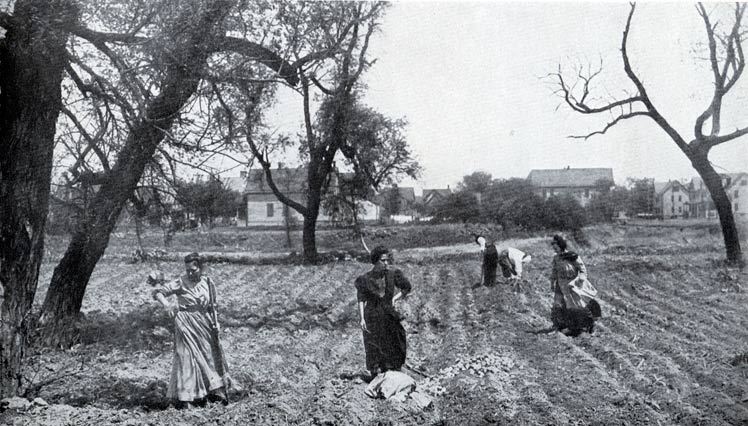
We heard how we need to keep our hands to the plough and persevere.  
We have heard how we need to proclaim the Kingdom, and heal the sick.
Today we hear about who it is that we are to go and be with, and far we are to go.

Love your neighbour as yourself.

We say this every Sunday.
Actually we confess that we haven’t loved our neighbour as ourselves.
It is a confronting moment.
We admit that we haven’t done as we are expected.
A moment when we admit we have let ourselves and God down a bit.

We have not loved our neighbour as ourselves.

The lawyer asks Jesus “Who is my neighbour?”

This leads Jesus into the parable of the Good Samaritan.
We know this story so well.
But time has softened this story.
We need to understand the explosive nature of Jesus using a Samaritan as the one who gets it right.
The words good and Samaritan just didn't go together

We should rename it in our time as “The Good Terrorist,” or “The Good Drug Dealer” or “The Good Lawnmower Thief.” That was the status of the Samaritans in Jesus time. They were pretty low in Jewish society.

Jesus is a master story teller.
He sets up the story so we expect something.

The priest avoids the man left for dead, as does the Levite.
The audience at this time would expect this.
These two can’t be near a dead person, as it means they would not be able to carry out their religious duties.
At this point the audience will be expecting that it will be an Israelite, someone like themselves who will be the hero, the one who does the rescuing.
A common man, instead of a cleric.

But Jesus takes it further.
It is the lowest of the low that gets it right.
And not just that, they go beyond.
It is the person that no one wants to be near that goes near to the one in peril.

At this we point we can think of the man who has been beaten.
It is likely he is an Israelite, and the one who is helping him is his enemy.
He would not have spoken to a Samaritan.
He would leave a place if a Samaritan turned up.
Yet here he is in a state of near death, and it is this enemy who is caring for him.
What will this Israelite think of Samaritans now?
Can they continue to be a people who he despises?

And likewise the Samaritan. This enmity went both ways, yet here the Samaritan helps the Israelite, an enemy.

Jesus asks the lawyer: “Which of these three, do you think,
was a neighbour to the man who fell into the hands of the robbers?” 

By making the hero a person from the lowest strata of society,
Jesus expands the meaning of neighbour.
Our neighbour is anyone.
It is those who we may not want to associate with.
It is those who are not like us.
It is those who we don’t agree with.
It is those who anger, frustrate, repulse, infuriate, or even repel us.
All are our neighbour.

We have not loved our neighbour as ourselves.

This affects the way we live our lives everyday.

It affects the way we view everyone.
No longer can we say ‘I don’t need to worry about that person.’
No longer can we say ‘I can’t work with that person.’
No longer can we say ‘they are my enemy.’
They are our neighbour. They, meaning a group that is outside or other, can no longer exist. They are our neighbour. They are us. We.

We all have our blind spots.
We all have prejudices that hinder our loving of some people.
I know a few of my own, and I am ashamed at the way I think of people from certain institutions.
You see the thing is, it is easy to worry about the poor and sick.
It is easy to think they are our neighbour, because we can see a need and our desire as Christians is to help and heal.
But it is the people we see as being opposed to us that are more difficult, like the Samaritans for the Israelites.

Jesus said “Go and do likewise.”

Go love your neighbour as yourself.
As the Samaritan loved the beaten man. 
Go and do likewise.

We can’t discriminate  about who we love.
It isn't a matter of having a hierarchy of people we love.
It is a matter of loving all,
no matter their religion, race, class, nationality, what football team they support, or even their core values.

We are called to love our neighbour as ourselves,
and Jesus tells us our neighbour is everyone.

As God’s love is for everyone, so our love must be for everyone.

And this answers the Lawyer’s first question:
“What must I do to inherit eternal life?”

To inherit eternal life, we must love our neighbour as ourselves,
and our understanding of who our neighbour is must be expanded to include all humanity.

As the Samaritan loved the wounded man, God loves wounded humanity.
We are to do the same. We are to love all we meet, the same as God loves everyone.

Who is my neighbour?
Everyone.
Those who you like being with, those you don’t even want to know.


Jesus tells us “Now go and do likewise.”

Sunday, July 7, 2013

Sermon for the Seventh Sunday after Pentecost


‘The kingdom of God has come near to you.’ 

Last week we heard about persevering and hold firm to the faith, not looking back, and looking forward, keeping our hands on the plough.

In today’s Gospel, Jesus outlines what discipleship looks like and does.
He speaks of the scarcity of workers and the difficulty of the mission.
He also tells us what we are to do, and what we are to proclaim.

Jesus sends out 70 disciples.

If we think about all the crowds that have followed him,
who have heard his teachings,
who have witnessed his healings,
who have been in his presence,
the fact that there are only 70 who have put their hand up to proclaim the good news doesn’t seem like a good conversion rate.

But if we remember the three who did put their hands up in last Sunday’s gospel, we can understand why.

To be a disciple, to go out and proclaim the good news is not for the fainthearted, it is not for the lukewarm.
It requires a strong belief, and understanding of the importance of the task. Proclaiming the good news becomes the number one aspect of a disciple’s life. It becomes the disciple’s everything.

Jesus addresses this scarcity of disciples
“The harvest is plentiful, but the labourers are few;

He knows there are only a few to do the work.
He knows it is a tough job, and he is asking not only for their time,
but really, he is asking for their whole lives.

The harvest he speaks of is all those who have not heard the good news. The harvest was plentiful in Jesus time, and it is in ours too.

The harvest is indeed plentiful.

We only need to walk outside the church, up the street,
into the supermarket or pub to know how many people haven’t heard the gospel.

We also only need to look around in here to know how few the labourers are.

We are the 70 out of all those crowds who heard Jesus.
We are the ones that said I will follow you Lord, and did just that.
But we are few in number.

And as Jesus sent those 70 out ahead of him,
he sends us out ahead of him, to proclaim

‘The kingdom of God has come near to you.’ 

The Kingdom of God has come near to you, it has come close.
The kingdom of God where the sick are healed,
demons are expelled,
those born blind can see,
the kingdom where the lowest are the highest,
where the mighty are made low
and where children are as important as elders.

This kingdom has come near.
This is what we are to proclaim.
This is the good news for those with ears to hear, with eyes to see.
It is this good news that so many long to hear, but cannot hear it.

Most people wish for a just society where the sick are cared for and those who cannot care for themselves are cared for by others.

We are called not to just proclaim that, but actually be and do that.
Jesus called the 70 to cure the sick who are there.

We are called to heal those in our towns.
To heal them of their pain and suffering.
Sometimes we can see how some are sick,
and we know within our church there are many that are unwell
and are waiting for medical procedures.
We pray for their speedy recovery,
we pray that those who have been charged with their care will use their skill and healing abilities to cure those we love.

But it is to those we don’t know that we need to pray for.
It is to those who are sick that do not know of the healing power of prayer,
the laying on of hands,
the anointing with oil,
that we are called to reach out to,
to let them know that we, the church, are with them in their pain,
and we will do all that we can to help in their recovery.

But there are the illnesses we don’t see.
Depression, addiction, anxiety.
It is to those who suffer these that we can sometimes be of more help than medical professionals.
To be a disciple, to heal the sick,
in these cases can sometimes be as simple as just listening.
To hear a person’s story,
to let them feel that there are people who care for them,
to let them know that they are welcome,
that Christ welcomes them, as he says
“Come to me all who are heavy laden, and I will give you rest.”


To suffer from such illnesses is to be truly heavily laden.
The peace that a life in Christ offers is a peace that can lift depression,
can release the claws of addiction,
can calm anxiety.

It is this peace, this good news that we are to proclaim.
That is how we can be a part of Christ’s healing.
That is how we can heal those we meet.

That is the good news we are to proclaim.

The harvest is plentiful.
There are many people who have not heard the good news,
but are yearning for the life that the coming Kingdom will provide.

The labourers may be few, but we are ready and willing to work.

The Kingdom that we are to proclaim has indeed come near.
It has come near in the person of Jesus Christ, and continues to be near as we who are the body of Christ are sent out to do the work that our world so desperately needs.

To those who are heavy laden, it is our responsibility as members of the body of Christ, the church, to show them the rest and peace that a life lived in Christ can provide.

The kingdom of God has come near.
It continues to be near for us.
That is something too wonderful not to share with all we meet.

Sunday, June 30, 2013

Sermon for the Sixth Sunday after Pentecost


“No one who puts a hand to the plough and looks back is fit for the kingdom of God.”

When I first felt the calling to be a Priest, back in Christchurch, I was in discussion with the Director of Ordinands. He advised me to talk to one of the priests in the diocese.

Fr Adrian invited me to his church that Sunday, and to have lunch with his family. 
As we ate lunch and discussed all sorts of things, he told of his call to the priesthood. 
Fr Adrian had been a potato farmer in Wales. 
One morning he was on his tractor, ploughing for planting.
He was in the middle of line, and he looked back to see if it was straight.
At that moment, this line from scripture came to him with great force:

“No one who puts a hand to the plough and looks back is fit for the kingdom of God.”

At that moment he knew that he could no longer ignore the call that God was making on his life.
For him, he knew he had to give his life as completely as he could, and for him that meant becoming a Priest.

The call God has on all or lives is much the same. 
For Fr Adrian it meant becoming a Priest, but for others it will be some other role.  
But the call is the same. 
It is how we respond to the call that matters, not what the particular call is.

“No one who puts a hand to the plough and looks back is fit for the kingdom of God.”

A man who says to Jesus

“I will follow you wherever you go.” 

Jesus answers
“Foxes have holes, and birds of the air have nests;
but the Son of Man has nowhere to lay his head.” 


A life following Jesus means a life of wandering, with no guarantee of a house or place to sleep.  Following Jesus does not mean material security or comfort.
It sometimes means we won’t know where we are, what we are supposed to do,
or even where we are going. 
Sometimes we won’t know who we are.
It means letting go of the things that keep us safe, letting go of the things that can sometimes hinder our listening to God’s call.

Jesus asks another to follow him.

The man replies:
“Lord, first let me go and bury my father.” 

Another says,
“I will follow you, Lord;
but let me first say farewell to those at my home.” 


Both these two responses to following Jesus seem reasonable enough.
The desire to stay and bury ones relative in particular seems very reasonable.

But here the call of discipleship is shown in its strongest terms.
This is a common way of expressing things in Jewish culture, things are taken to extremes.
In choices, both options are taken to their polar opposites. 
If you love something, you hate the other. It is a literary device used to show difference.
In this case, the choice to proclaim the Kingdom of God is the extreme on the good end. And because it is such an important and wonderful thing, anything else in comparison becomes an extreme on the not so good extreme.

In the first example, following Jesus takes precedence over even fulfilling the duty of a son to bury his own father.  

Let the dead bury their own dead is a strong statement in reply to such a request.
It expresses the importance of following Jesus.
It is more important than anything else.
To proclaim the Kingdom of God takes precedence over everything else in our lives.
Sacrifice  security, duty, affection.
It is a call so urgent that all other loyalties give way to it.


In the next example, the man wishes to say goodbye to his friends.
Again, quite reasonable.
However, if we think more, it also means the man is hanging on to his past.
He is in between.  He is neither here nor there.  
He is as it states in the letter to Laodecia in the Book of Revelation, “lukewarm.”
He is neither  following or staying.  
He is nowhere.

What both these examples tell us is that the most difficult choices are not between good and evil. Those kind of choices are pretty easy to make.
The more difficult choices are between good and the best.
In those choices, we are asked to think about what is really the most important thing.
What is the best choice, rather than a good choice.
In terms of our faith life and our church life, Jesus is always the best choice.
It sounds a bit obvious, but it is very easy for us to focus on secondary things rather than the centre that is Christ. 

If Christ is at the centre of everything we do, we have chosen the best option.

 “No one who puts a hand to the plow and looks back is fit for the kingdom of God.”

All of you here today know a bit about this.
As a parish you have been through many issues that could have so easily led you to take your hand off the plough.
There must have been times when it seemed as if there was nothing else to do, but look back rather than keep on going.
I commend you for staying firm, ploughing away, keeping the proclamation of the Kingdom of God alive in this parish.
You have had choices to make, and you always chosen the best option, you chose to remain disciples, when it at times it would have been easier to give up and choose a good option rather than the best.

And here we are, a whole field ahead of us. Together, we can plough the field, sowing seeds, and harvesting the work that has been done. We don’t need to look back, we can only look forward, or hearts and minds focused on the Kingdom of God, with Christ at the centre of everything we do.

Friday, March 22, 2013

The house was filled with the fragrance of the perfume


The house was filled with the fragrance of the perfume. 


Of our five senses, our sense of smell is the most underrated, the one we think of the least.
Yet it is one that when we lose it, we really notice.
Think about winter when you have a cold.
You can’t smell anything, and you can’t taste anything.

Think about the change of seasons.
That first smell of spring.
The smell of rain of warm concrete.
Think of the smell of a crisp frosty morning.

Think too of the power of smell in regards to bringing back memories. Or rather, how a certain smell can take you back to a place instantaneously.

The other week, I visited a family who were smokers and they had many dogs. I haven’t smelt that particular combination since visiting my grandparents when I was a child. Straight away, I was in their lounge. In my mind I could see how the sun used to hit the wall above my granny’s couch. I could feel the texture of their leather chairs. I could hear the classical radio station. All of this in a split second by smelling stale cigarette smoke and dog.

And think of dogs. Their sense of smell is 100 times more powerful than ours. Yet they love the smell of revolting things. Yet it is through their sense of smell that dogs work out whether someone is ok or not, whether to trust them or not. They can smell fear, joy, and sadness.


Our sense of smell is a remarkable thing.

Our sense of smell bypasses our intellect and our understanding.
It is primal and it gives us information that none of our other senses can.

In the Bible, smell is recorded in mainly two types of occasions:
love and death.
The Song of Songs repeatedly speaks of fragrances and scents in terms of love, and incidentally is the only other place in the bible where nard, or spikenard, what Mary anoints Jesus’ feet with, is mentioned.

But it is mentioned in terms of death, most often in terms of corpses.
It is not the fragrance of death, but rather the stench of death.

John in his gospel uses the sense of smell only twice:
once in today’s reading and the other in the section that immediately precedes it.
He uses the sense of smell to convey information to us that goes beyond our initial reading, goes beyond our intellect, and taps into our primal instincts.

John places two smells side by side.
The stench of death and the fragrance of love.
And he places them together.

At the raising of Lazarus, it is Mary’s sister who speaks of the sense of smell.

Martha, the sister of the dead man, said to him, "Lord, already there is a stench because he has been dead four days."

This is Martha who busied herself in the kitchen, while Mary sat at Jesus’ feet.
When Martha complained to Jesus, he said:

"Martha, Martha, you are worried and distracted by many things; there is need of only one thing. Mary has chosen the better part, which will not be taken away from her."
Lk 10:41-42

There, Jesus is telling her she is missing the point.
And at the raising of Lazarus, she has made the same mistake.
She is concerned about the smell of death, how the situation is hopeless. Jesus reminds her:

 "Did I not tell you that if you believed, you would see the glory of God?" 

She is focused on the death, not the promise of resurrection.

John uses the sense of smell to link this to the next scene.
The type of smell has changed.
It is not a stench, but a fragrance.
The sister has changed; it is Mary instead of Martha.
Mary, who chose the better part.


Instead of the stench of death, now the smell is nard.
This smell is associated with love.

Martha speaking about the stench shows us her not getting it.

"Did I not tell you that if you believed, you would see the glory of God?" 

The smell of the nard that fills the room shows how Mary has got it; she has chosen the best part.


Mary’s gesture of anointing is an act of adoration. It is an act of overwhelming devotion. It is an act of abundance and extravagance. It is an act of love.

If our lives are filled with love for Christ, a love that is full of adoration and worship, we like Mary, have chosen the best part.

It is then that our lives will be filled with the fragrance of love of Christ, and fragrance that will permeate all aspects of our life. It is the fragrance of faith. It is the fragrance of love.

Monday, March 11, 2013

I am no longer worthy to be called your son


I am no longer worthy to be called your son.
But when this son of yours came back
Son, you are always with me, and all that is mine is yours
This parable is mainly known as “The Prodigal Son.”
While there is nothing wrong with that title, it doesn’t really do justice to the whole of the story.
The story is not just about the son.
It is about the father.
It is about the older brother.

 It is about the relationships between all three:
father and younger son, father and eldest son. It is about the relationship between the two brothers.

I am no longer worthy to be called your son.

This is how the youngest son feels when he comes to himself after his journey into dissolute living.

Why does this mean he is no longer worthy to be called his father’s son?

His behaviour is one reason, but we need to remember that he asked his father for his share of the inheritance.
This was due to him, yes, but not until his father died.
By asking for it early, he is saying that his father is dead to him.
There is great pain here. Yes his behaviour and squandering the money is selfish and short sighted, but his desire to get it before his father’s death is difficult.

 But when this son of yours came back

The son has returned back home, and his father has welcomed him back with an overwhelming joy.

The speech he has prepared in his mind

"Father, I have sinned against heaven and before you;
I am no longer worthy to be called your son;
treat me like one of your hired hands."

He does not get to finish: he is cut off by his father’s extravagant overwhelming love.
He doesn’t get to say: treat me like one of your hired hands.

He does repent, but he does not need to degrade himself.

But the speech when compared what the elder son says reveals much:

'Listen! For all these years I have been working like a slave for you,
and I have never disobeyed your command;
yet you have never given me even a young goat so that I might celebrate with my friends.
But when this son of yours came back, who has devoured your property with prostitutes,
you killed the fatted calf for him!' 

Where the younger brother felt he was no longer worthy of being called a son, the elder brother feels he has been treated like a slave.

Both siblings feel in some way they are no longer sons.
One feels he is not worthy, the other that he has not been treated like a son.

Furthermore, the elder son no longer feels kinship with his brother:

But when this son of yours came back

He has disowned his brother, and feels he has been treated like a slave by his father.
Note, he must have been feeling this resentment before his brother returned home.


So, who really is lost?
The younger son left, misbehaved, repents and returns.
The elder son stays, works hard, and feels mistreated.

Who is the lost son?
Who has the father really lost?

The elder son feels he has lost his brother and his father.
His resentment at his father’s forgiveness means he is removed from both his father and his brother.

God’s forgiveness and love for us is confronting and reassuring.
Like the younger son we sometimes go far away, selfishly doing what we want, not thinking of what God or those closest to us want and need from us.

Like the younger son, we also come to ourselves.
We realise how far we have gone, and make our way back.

Always, God is there. He only needs to feel our sorrow in what we have done.
He does not need us to denigrate ourselves.

But I can’t help but feel that those of us in the church are a bit more like the elder son.
We are always here.
We are the ones who keep the place going.
We are the ones who pray for everyone.
We are the ones who will help the dying.
We are the ones who deserve God’s love.

We feel like we have worked like slaves, keeping our noses clean, doing everything right.

We see those outside of us.
We may say they are as deserving of God’s love as we are, but do we really mean it?
Are we not a bit like the elder son?

But when this son of yours came back, who has devoured your property with prostitutes, you killed the fatted calf for him.

Sometimes it is very difficult to accept how forgiving God is.
It can feel like we have been ripped off

I have never disobeyed your command;
yet you have never given me even a young goat so that I might celebrate with my friends.

We do not earn God’s love.
We do not earn God’s forgiveness.
It is by God’s grace that we receive his love and forgiveness.

And God asks us to do the same to others.

Forgive us our sins and we forgive those who sin against us

The father says to the elder son:

'Son, you are always with me, and all that is mine is yours. 
He is saying:
I love you.
I have always loved you.
I am with you to the end of the age.
My love is big enough for everyone there has ever been and ever will be.
It does not mean I love you any less, or my love is worth any less.

God forgives us all we do wrong.
He asks us to do the same for others he loves.


Sunday, March 3, 2013

How often have I desired to gather your children together as a hen gathers her brood under her wings, and you were not willing!


How often have I desired to gather your children together as a hen gathers her brood under her wings, and you were not willing! 

With these words, Jesus speaks of the endless love God has for his people.
The imagery of wings comes straight from the psalms and the prophets.
Nothing new is being said about God.
What is different is the context it is being said in and to.
What is different is the person who is saying it,
and what he is about to do to show how much God means it.


It is important to understand what Jesus is saying here.
It is likely he is quoting a lament, one which was likely uttered by God.
It sounds ancient, like a long lost refrain of lament,
one that has been repeated and repeated over centuries.
It aches with yearning, it hangs like a heavy cloud with sorrow.
When Jesus says it, the past times it references become tangible,
all the sorrow felt by God is present.
It has broken through into the now.
Now that it is present, now Jesus must act.

Jerusalem, Jerusalem,
the city that kills the prophets and stones those who are sent to it! 

God sends his prophets to turn his people back to him.
When the people err, God does not punish,
but gently sends someone to tell them how to get back with God

We read in the Second book of Chronicles that the people had become unfaithful, following the ways of other nations. But:

The LORD, the God of their ancestors, sent persistently to them by his messengers, because he had compassion on his people and on his dwelling place; but they kept mocking the messengers of God, despising his words,
and scoffing at his prophets, 


And the Book of Nehemiah:
Nevertheless they were disobedient and rebelled against you and cast your law behind their backs and killed your prophets, who had warned them in order to turn them back to you, and they committed great blasphemies. 

But even with such responses, such rejection of his ways, God does not give up.

Jesus follows his lament of what has been,
with a lament of what God,
what He has longed to do,
what he wishes he could.
What he will do, and do that very thing in Jerusalem

How often have I desired to gather your children together as a hen gathers her brood under her wings, and you were not willing! 

This is a remarkable image. Jesus uses feminine imagery to describe the love and unrelenting forgiveness of God.

as a hen gathers her brood under her wings


The Prophet Isaiah expressed God in feminine terms.

For the LORD has comforted his people, and will have compassion on his suffering ones.
Can a woman forget her nursing child, or show no compassion for the child of her womb? Even these may forget, yet I will not forget you. (49:13-16)

Both Jesus and Isaiah use feminine imagery when describing the overwhelming compassion of God for his people.

Imagery of God as a bird, with wings protecting is quite common in the Old Testament:

Throughout the psalms we hear this:

Let me abide in your tent forever, find refuge under the shelter of your wings. (61:4)

And the prophet Isaiah:

Like birds hovering overhead, so the LORD of hosts will protect Jerusalem; he will protect and deliver it, he will spare and rescue it. (31:5)


And in Deuteronomy:
As an eagle stirs up its nest, and hovers over its young; as it spreads its wings, takes them up, and bears them aloft on its pinions (32:11-12)


Jesus uses these two images: that of the feminine, and that of a bird,
and he combines them into one of motherly love and protection.
The image of the wings stretching to gather rather shielding works when we think what will happen to Jesus when he finally goes to Jerusalem.

How often have I desired to gather your children together as a hen gathers her brood under her wings, and you were not willing! 

But the wings will become arms.
They will be stretched to gather,
but they will be stretched and nailed onto a cross.
It is in this that he will gather his people.
It is in this that God will show his endless love.
Not in protection by wings, but in the outstretched arms of Jesus upon the cross. Not soaring high above, but lifted up from the earth,
drawing all men to himself, gathering all people to God.

It is in Jesus arms stretched in the ultimate sacrifice that God will show how a hen gathers her brood. It is in Jesus arms wide open upon the cross that God will show his unrelenting love for his people.

If you are the Son of God...


Over this Epiphanytide, we have heard about who Jesus is, how his true nature was revealed to the world, from his Baptism by John, through to his revealing of his divinity in the Transfiguration.

The point of today’s  gospel is another revealing, but more about how than who.

We also meet another character, the devil.
He too reveals himself as he really is.
Not as evil personified, but more a tempter, a giver of options.

The way the two interact over these three scenes reveals much about Jesus Messiahship, and the devil’s methods and role in the divine economy.
The conversation between these two also reveals much to us about both their roles in our lives.

Jesus has just been baptised by John, and now led by the Spirit, goes out into the wilderness. We have to assume that this time is one of great contemplation and meditation for Jesus. He has been in deep communion with the Father. He has been learning of his mission.

He is tempted by the devil.
In the three temptations, he offers Jesus choices.
All of the choices actually seem ok, if not downright reasonable.
But the way Jesus deals with them shows what his communion with the father in the wilderness had taught him about his mission.

The devil said to him,
"If you are the Son of God,
command this stone to become a loaf of bread." 

If you are the Son of God.

 If.

 The devil is trying to just break in the tiniest amount of doubt. It is all he needs. He can’t work with 100% certainty here, but he only needs 0.1% to wriggle his way into consciousness. His starting point is self doubt.

command this stone to become a loaf of bread

Now this is not unreasonable. Jesus has been starving for 40 days. He would be very hungry.
And we know that Jesus will multiply loaves of bread to feed 5000 later on.
 If Jesus were to do this, people would gather around him, he would have an instant following.
"It is written,
'One does not live by bread alone.'" 

It is not the time for eating.
 Jesus time in the wilderness is to hear the will of the Father.
When Jesus does provide food as a miracle, it is not for himself, but for others.
It is done in compassion for those others who are hungry, not for his own cause.

The temptation to “do” a miracle is rejected.
 It would have been an easy way to gain followers, but Jesus’ time in communion with the Father has shown him that love is the way of the mission.

Then the devil shows Jesus all the kingdoms of the world.
He says he can give all of these to Jesus, he has the authority to do so, but only if Jesus will worship him.

What the devil is offering Jesus is the Kingdom of David, but as the whole world.
This is what the Messiah was supposed to achieve.
Scripture had told the Israelites this is what would occur.

The devil is crafty.
He is offering Jesus exactly what everyone expected of him.
This was surely his mission, and here it was, his for the taking.

But Jesus has heard otherwise.
What he has heard is that this is not the will of the Father, but the will of the people.

The temptation here can be seen as “the old way.”
That was the will of God, but since the incarnation, things have changed.
What was expected will now happen in a different way.

Then the devil takes Jesus to Jerusalem, to the top of the Temple.
He quotes scripture to Jesus about how God will protect him if were to throw himself from the top.


'Do not put the Lord your God to the test.'"

If he is truly the Messiah, there is no way he will fall to the ground.
God will save him.
The temple would be filled with people, all would witness this divine miracle, and Jesus would have an easy time of securing a devoted following.
Glory and recognition.

But Jesus knows his mission will end differently.
His time in Jerusalem is not one of glory and recognition.
In his passion, he will experience rejection, shame, and humiliation.
This is the way of the Messiah.

These temptations show us how Jesus will go about his mission, about what the Messiah will be.

But they also show us how the devil works. They show us how temptation works in our lives.
The temptations Jesus faces aren’t evil in themselves.
But they are easy way out options. They are quick fix.

All of them would get the job done. All of them would reveal Jesus as the Messiah of expectation. They would all give him an instant following. But, they all do it in a way that is not right.

This is how the devil works. He tempts with an option that will get the desired result, but ultimately will go against what we are trying to achieve.

Most temptation works in this way. It is the easy way. it is the way that lets something get passed as “good enough.”  Once done, it is easier to do again. And so on.

This is how the devil and temptation work most often.
By offering an easy way, a way of cutting corners.

The way to avoid such a temptation is the same way Jesus did. By listening to God’s will in our lives, we can hear the temptations for what they are.

And if we are strong, prayerful, and filled with the spirit, we can almost be grateful for them.
Because it is often by seeing the wrong way that the right way becomes clear.