Pages

Saturday, December 27, 2008

Song of the Year


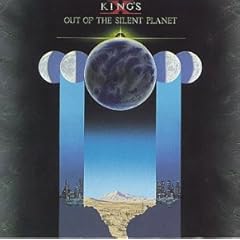
I have decided that my song of the year is "Goldilox" by Kings X.


Earlier in the year, I went to meeting, but arrived early.

I waited in our chapel until everyone was ready, or the right people were there.

I sat there, with my walkman on. This song was there, a favourite at that time, and still now,

I sat, staring at the large crucifix.

The words weren't about romantic love.

I can't believe summer's almost here
I made it through another year
even if alone
but there's no tears in my eyes
life is still full of surprise
I'm not looking for a one night stand
I stand behind you and I watch you from a mile away
wishing you could be the one but not here this way

I'd like to know your name and
I must know who you are
Yeah

I look at you and I know who you are
you're just a little bit too far from my home
but please don't get me wrong
even though it has been long
I hope I never sing my last song without someone

I'd like to know your name and
I must know who you are
Yeah


To me, listening to this song, staring at the face of the crucified Christ, it can only be about discipleship.

I'm almost sure it is about something different. On that night, it was about nothing other than a dialogue between myself and Jesus.

Wonderful stuff.

Tuesday, December 16, 2008

Music for Christmas: Nativity


Nativity
Christopher Orczy
2008

With my second major religious work, I have taken the moment of Jesus' birth as the subject. It is a long piece, 37 minutes.

You can listen and download here.

As in the earlier Annunciation piece, the source material was recorded on the Feast day; in this case Christmas day 2007. Likewise, the image for the artwork was again taken from
English Altars by Percy Dearmer.

Whereas in Annunciation, I used the text from Luke and expressed each "moment" of the dialogue between Gabriel and Mary with some inspiration from secondary, apocryphal sources; this time I wanted to express a singular idea: that of the birth of Jesus, the Incarnation of the Son of God.

Upon looking at the two Gospel narratives depicting the birth of Jesus one is struck by how scanty the information regarding the actual birth is. In both Matthew and Luke it is almost mentioned in passing.
And Joseph arose from his sleep,
and did as the angel of the Lord commanded him,
and took unto him his wife;
and knew her not till she had brought forth a son:
and he called his name JESUS.
Matthew 1:24-25 RV

And she brought forth her firstborn son;
and she wrapped him in swaddling clothes,
and laid him in a manger,
because there was no room for them in the inn.
Luke 2:7 RV

We are give more detail on events that occur after; in the case of Matthew, the wise men; in Luke the angels and the shepherds.

Turning to non-canonical sources, there are some fantastic versions of the actual birth, in particular The Protevangelium of James (c 150). At the moment when Mary goes into labour, she tells Joseph, who leads her to a cave. He then heads off to Bethlehem in search of a midwife. He experiences a vision:
And I Joseph was walking,
and was not walking;
and I looked up into the sky,
and saw the sky astonished;
and I looked up to the pole of the heavens,
and saw it standing,
and the birds of the air keeping still.

And I looked down upon the earth,
and saw a trough lying,
and work-people reclining:
and their hands were in the trough.
And those that were eating did not eat,
and those that were rising did not carry it up,
and those that were conveying anything to their mouths did not convey it;
but the faces of all were looking upwards.

And I saw the sheep walking,
and the sheep stood still;
and the shepherd raised his hand to strike them,
and his hand remained up.
And I looked upon the current of the river,
and I saw the mouths of the kids resting on the water and not drinking,
and all things in a moment were driven from their course.
Protevangelium of James 18.
The idea that time is stopping, that eternity is becoming temporal is a beautiful depiction;

Once Joseph returns with the midwife, visual phenomena that is usual for describing God's presence is described. We see this same imagery used at the Annunciation earlier in the Protevangelium of James:

And they stood in the place of the cave,
and behold a luminous cloud overshadowed the cave.

And immediately the cloud disappeared out of the cave,
and a great light shone in the cave,
so that the eyes could not bear it.
And in a little that light gradually decreased,
until the infant appeared,
and went and took the breast from His mother Mary.
Protevangelium of James 19.


The stilling of time, and the light and cloud images are a mythical description of:
And the Word became flesh,
and dwelt among us
John 1:14 RV

The Nativity piece is an attempt to put all this together, as much as it is possible. I didn't want to compose a Christmas piece using the Shepherds or the Wise Men; my interest was far less about narrative. I liked the idea of birth, the idea of a new beginning. While both Matthew and Luke tell us about Jesus' being born, they don't tell us about his birth.

The other idea that guided the piece was from later in Luke. When Mary and Joseph take the infant Jesus to the Temple, Simeon the prophet holds Jesus in his arms, and after blessing them, says to Mary
Behold,
this child is set for the falling and rising up of many in Israel;
and for a sign which is spoken against;
yea and a sword shall pierce through thine own soul;
that thoughts out of many hearts may be revealed.
Luke 2:34-35 RV

Maybe it is my natural gloominess, but while I think Christmas is wonderful: we are after all celebrating God's love for us, there is a darker side. Simeon's prophecy that this baby will be the falling and rising of many is both good news and bad news. It also hints at what is to take place on Calvary 30 or so years later. While the birth of Jesus is the best thing to happen, to be a follower of Christ is not "an easy option". Simeon states to Mary (who may be seen as the ideal follower of God's Word) that a sword will pierce her soul, and the thoughts of many will be revealed. Many will not see the light, and many will be persecuted for speaking of it. It is a difficult road, but one which once shown, is impossible to deny.

Merry Christmas everyone.
For God so loved the world,
that he gave his only begotten Son,
John 3:16 RV

Monday, December 8, 2008

Music for Advent: Annunciation


Annunciation
Christopher Orczy
2007

Since today is "The Immaculate Conception of the Virgin Mary", I thought it most fitting to post my piece "Annunciation".

You can listen and download it here.

Annunciation
7 Atmospheres for Luke 1:26-38

1. Mary
Now in the sixth month the angel Gabriel was sent from God unto a city of Galilee,
named Nazareth,
to a virgin betrothed to a man whose name was Joseph,
of the house of David;
and the virgin’s name was Mary.

Within Luke’s Gospel, we are told very little about Mary. She is a virgin, engaged to be married to Joseph, who is of Davidic descent. We aren’t told of her appearance, her expression, or her manner.

2. Appeared
And he came in unto her,
and said,
Hail,
thou that art highly favoured,
the Lord is with thee.

Similar to the previous passage, we are not told anything of Gabriel’s appearance, or the manner of his arrival. Several of the apocryphal writings are more descriptive in their retelling of this passage.
The Nativity of Mary (600 CE) has "he filled the chamber where she was with a great light."
The Martyrdom of Bartholomew (400 CE) has Gabriel “gleaming like the sun”;
and the Questions of Bartholomew (400 CE), Mary describes Gabriel’s face as “incomprehensible.”

3. Troubled
But she was greatly troubled at the saying,
and cast in her mind what manner of salutation this might be.

Mary seems to have no difficulty with Gabriel’s presence, but his words worry her. “The Lord is with thee” is a phrase that would have been familiar to Mary (and Luke’s readers) from the Torah. “Thou that art highly favoured” is what is causing her concern. Mary ponders what has she done (or not done) that would cause God to favour her.

4. Greatness
And the angel said unto her,
Fear not,
Mary:
for thou hast found favour with God.
And behold,
thou shalt conceive in thy womb,
and bring forth a son,
and shalt call his name JESUS.
He shall be great,
and shall be called the Son of the Most High:
and the Lord God shall give unto him the throne of his father David:
and he shall reign over the house of Jacob for ever;
and of his kingdom there shall be no end.

Gabriel recognizes that Mary is troubled, and consoles her. Gabriel’s second discourse contains three elements: a reiteration of Mary’s favoured status; Mary is to conceive a child; and what the child will accomplish in his earthly existence. Once again, Luke uses familiar Jewish phrases to describe who this baby will be.

5. How
And Mary said unto the angel,
How shall this be, seeing I know not a man?

The most important concept of this passage comes from what Mary does not say. She has no difficulty with idea of having a child. Her question concerns the howabouts of the conception. In many ways, Mary’s question and Gabriel’s forthcoming answer are the essential core of Luke’s annunciation, and central to the season of Advent and the Nativity.

6. Cloud
And the angel answered and said unto her,
The Holy Ghost shall come upon thee,
and the power of the Most High shall overshadow thee:
wherefore also that which is to be born shall be called holy,
the Son of God.
And behold,
Elisabeth thy kinswoman,
she also hath conceived a son in her old age:
and this is the sixth month with her that was called barren.
For no word from God shall be void of power.

Luke uses imagery that is reminiscent of the creation passages of Genesis (1:2; 2:6).
And the earth was waste and void;
and darkness was upon the face of the deep:
and the spirit of God moved upon the face of the waters.

but there went up a mist from the earth,
and watered the whole face of the ground.

In the aforementioned apocryphal Questions of Bartholomew, Mary describes the event
I looked up into heaven and there came a cloud of dew and sprinkled me from the head to the feet

7. “be it unto me”
And Mary said,
Behold,
the handmaid of the Lord;
be it unto me according to thy word.

And the angel departed from her.

Mary’s acceptance of what to occur makes her the first Christian. On a larger scale, her agreeing to God’s will reminds us that God can and does act within our lives; and recognizing His presence is not the pursuit of Christians solely, but rather for all mankind.

Within the next week, I will be posting another piece, "Nativity".

Monday, November 17, 2008

The wonderful world of "Jesus Music" and music blogs.


My recent rant about Christian metal and Hillsong has stayed with me. In usual fashion, I began to wonder whether I have it all wrong, and Christian metal is in fact not "right". An independent test would suggest that it is evil. It certainly sounds so at times.

This is not really a problem most of the time. Yes, it sounds dark, but the lyrics are covering dark subject matter: the Crucifixion, the Apocalypse, sin, and so forth. But sometimes, one doesn't want to feel depressed about the faith (church attendance numbers does a good job of that)

I Googled "Christian Progressive Rock" and found a whole new world. Well, two in fact: the world of "Jesus Music" and "Music Blogs".

The world of Jesus Music is truly a timely blessing for me. Here I was thinking Christian rock was dire sentimental nonsense. And the golden era (1967-1979) didn't seem to hold much hope, from what I had read.

Then the whole idea of "underground" came up. It ends up there was a whole psychedelic Christian rock scene; sort of contemporaneous with the hippy thing. It is completely hippy: but instead of acid and dope, it is Jesus and the Bible. Istead of "free love", it is love everyone. Wonderful, and completely logical.

The first album I came across was Jimmy Hotz "Beyond the Crystal Sea".

A late 70's progressive rock gem: bits of Yes, Styx, Rush, Pink Floyd, and he sings a bit like Peter Gabriel.

I'll post more as I get time beyond listening.

Thursday, November 13, 2008

Dreams do come true!

It is just a shame when it is the ones that really suck.
It is even worse when the dream only prefigures one small aspect of what is occur.

Tuesday, November 11, 2008

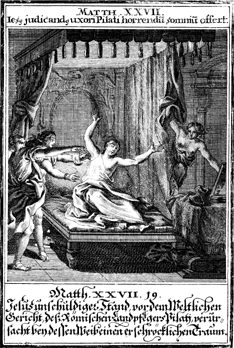
"Dream a little dream of me"


And while he was sitting on the judgment–seat,
his wife sent unto him,
saying,
Have thou nothing to do with that righteous man:
for I have suffered many things this day in a dream because of him.
Matthew 27:19 RV

I was confronted in a dream this morning by two of my least edifying features, both of which are related to an earlier post.

The dream consisted of me organising the vessels for a Eucharist. It was in a restaurant kitchen where a meal was being prepared. The vessels I had been given to prepare were filthy with dirt and old wine.

As I was cleaning them, two of the chefs asked me to put four spoons of some tomato stuff into a pot. I did this.

When I realised that I had been taking way too long cleaning the vessels, I got ready to leave. Two of the chefs stopped me, and asked what size spoon I used. Was it a teaspoon? I knew I had used a tablespoon, but I lied, and said I had indeed used a teaspoon. They saw through my deciet and showed me the meals that I had ruined.

I was worried, and started to complain about the vessels, and the time, and how if there was any trouble with the Priest, I would walk out.

I awoke with a sense of dread. Before me were my weak points, the parts of my personality that I can't stand: open, bare and raw. A very harsh way to wake up.

My dream stayed with me all day.

In the New Testament, dreams are mention very infrequently: in fact Matthew is the only Evangelist who exclusively uses the idea of divine revelation coming from dreams. Joseph is told all about Jesus conception, when to go to Egypt, when it safe to go back. The Three Wise Men are warned in a dream about Herod's plan to kill Jesus.

The most interesting dream reference comes much later in Matthew's Gospel, when Jesus is on trial in front of Pilate. At one point, Pilate's wife comes to him and says:

Have thou nothing to do with that righteous man:
for I have suffered many things this day in a dream because of him.
Matthew 27:19 RV
I am not suggesting that my dream was a divine revelation. What I am saying is that our dreams very often point out our horrible points. Without the benefit of gloss or blur or sugar.

I would love to know what Pilate's wife's dreams were.

Sunday, November 9, 2008

Martha and Mary

Martha and Mary
Maurice Denis
1896
Now as they went on their way,
he entered into a certain village:
and a certain woman named Martha received him into her house.

And she had a sister called Mary,
which also sat at the Lord’s feet,
and heard his word.

But Martha was cumbered about much serving;
and she came up to him,
and said,
Lord,
dost thou not care that my sister did leave me to serve alone?
bid her therefore that she help me.
But the Lord answered and said unto her,
Martha,
Martha,
thou art anxious and troubled about many things:
but one thing is needful:
for Mary hath chosen the good part,
which shall not be taken away from her.
Luke 10:38-42 RV

I have liked this story since I first read it last year. It has a wonderful twist. As a first time reader, we expect Jesus to heed Martha's request and rebuke Mary for being lazy.

Lord,
dost thou not care that my sister did leave me to serve alone?
bid her therefore that she help me.
Luke 10:40 RV
But it is not so.

Instead, Jesus suggests she chill out, and look at the bigger picture. Instead of worrying about who is or is not doing their fair share, she should either just get on and do, or not. It is not worth worrying about.
Martha,
Martha,
thou art anxious and troubled about many things:
but one thing is needful:
for Mary hath chosen the good part,
which shall not be taken away from her.
Luke 10:41-42 RV

He then informs her that Mary has her priorities correct. Instead of worrying about the mundane, she is learning the word.

What are we to take from this?
Is it that we are to engage in the spiritual life at the expense of the active life?

I think Jesus' point is somewhat more subtle. I don't think he means that we should negate the active life of service for the spiritual life. More, that if we are to be active and serve, we should do so uncomplainingly. If we are to be concerned about something, it shouldn't be the mundane reality stuff, more the spiritual side of our lives.

for Mary hath chosen the good part,
which shall not be taken away from her.
Luke 10:42 RV


The learning of the spirit is something that cannot be taken or lost.

We meet this same Mary later in Jesus' life. It seems she did learn while at Jesus' feet.


Mary therefore took a pound of ointment of spikenard,
very precious,
and anointed the feet of Jesus,
and wiped his feet with her hair:
and the house was filled with the odour of the ointment.
John 12:3 RV

I have previously written about the reasons for this incident here. What I am interested in now is for the second time we hear about her, she is doing something that someone believes Jesus should rebuke her for, in this case Judas:

But Judas Iscariot,
one of his disciples,
which should betray him,
saith,
Why was not this ointment sold for three hundred pence, and given to the poor?
John 12:4-5 RV
As in the earlier example, we expect Jesus to agree with the accuser. Yet once again, he surprises us with his reply:

Suffer her to keep it against the day of my burying.
For the poor ye have always with you;
but me ye have not always.
John 12:7-8

Both times, Jesus informs the accuser that they are looking at things the wrong way. Indeed, Mary has got it right once again. Both times, Mary is doing something that could be regarded as selfish, and both times Jesus response seems to be egotistical, which I don't think they are.

Jesus reminds us that the spiritual life is of more concern than the material life. Yes, Martha could use a hand. Yes, the poor could use the money. But beyond this, our devotion to Christ, and our commitment to our spiritual lives is where our prime concern should be. It is from here that we will be able to help others.

On a different point, it is interesting that Mary annoints Jesus' feet. In Matthew and Mark, it is his head. John uses this motif again:
and he took a towel,
and girded himself.
Then he poureth water into the bason,
and began to wash the disciples’ feet,
and to wipe them with the towel wherewith he was girded.
John 13:4-5 RV
So: Mary learns at Jesus' feet, then she annoints his feet, then he washes the disciples feet.